
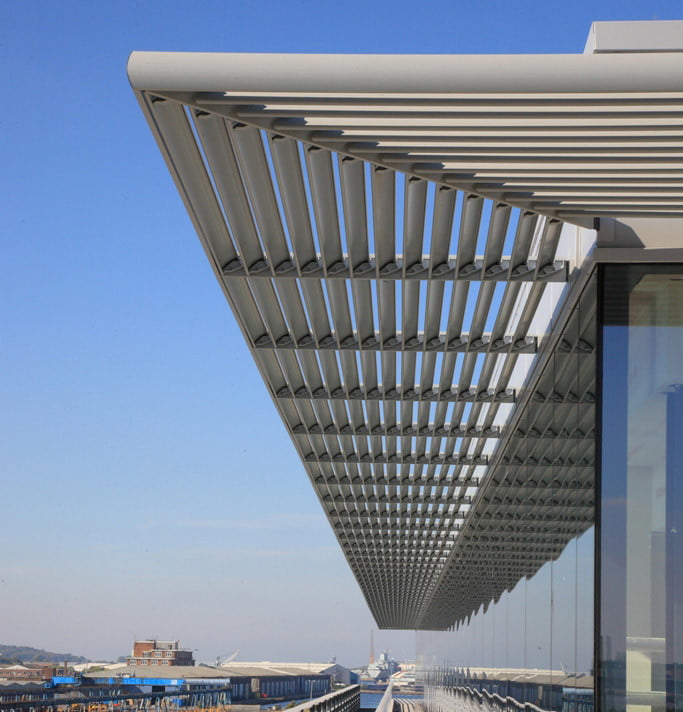
Brise Soleil plays a critical role in modern facade design, helping control solar gain, reduce glare, and enhance building aesthetics. However, even the best-designed systems can underperform if your brise soleil installation is not handled correctly.
Understanding the most common pitfalls in brise soleil installation can help architects, planners, and developers avoid costly issues and ensure long-term performance.
Below are the 5 most common mistakes with brise soleil installation.
1. Poor Alignment with Building Orientation
One of the most common mistakes some people make when installing brise soleils is not fully considering building orientation and sun path.
Brise soleil are designed and optimised to cover high summer solar angles. If they are incorrectly positioned or angled, they may block valuable daylight or fail to reduce heat gain effectively. Misaligned brise soleils can also lead to overheating, glare issues, and reduced energy efficiency.
To avoid this, a solar study should be carried out early in the design stage, allowing architects, planners and designers to correctly adjust the position, orientation and fin angles of the Brise Soleil based on facade orientation.
2. Incorrect Fixing and Structural Support
Brise soleil are often exposed to wind loads and environmental stress, particularly on building corners, roof levels or exposed facades. A common installation mistake is underestimating the structural requirements of the fixing grounds or using inappropriate fixing methods, which can result in system failures and safety risks.
Professional installation ensures fixings are designed to meet project-specific wind and load calculations. Our installation specialists only use the specified and engineered fixings and materials for each design, ensuring maximum safety and support without compromising on aesthetics.
3. Lack of Integration with the Facade System
Brise soleils should never be treated as an afterthought. When installation is not properly coordinated with other elements such as facades, issues can quickly arise. This often leads to issues with available fixing grounds and co-ordination with cladding and curtain walling.
Disjointed integration affects both performance and aesthetics, for example air-tight sealing, and inconsistent visual alignment. reducing the overall impact and value of your building facade design.
By integrating brise soleils into the facade design from the concept stage, most of these issues will be taken care of before the installation process. It is very important to ensure all parties are working from co-ordinated designs to ensure not only a good installation, but a smooth and efficient handover of each trade.
Working with a single specialist like Contrasol who understands both solar shading and facade systems, through the design, manufacturing and installation process can really help ensure projects go as smoothly as possible.
4. Ignoring Maintenance and Access Requirements
Another overlooked aspect of brise soleil installation is long-term maintenance. If access for cleaning, inspection, or replacement is not considered, even high-quality systems can become difficult and costly to maintain.
Design that takes safe and practical maintenance access into account ensures the longevity of your architectural system. Selecting durable, low-maintenance materials such as aluminium also ensures the long term natural up-keep of the facade.
5. Choosing a Standard Solution for a Bespoke Requirement
Not all buildings are the same, yet a common mistake is applying off-the-shelf brise soleils to complex or unique facades. This can result in compromised performance or a system that does not fully integrate into or with the building fabric.
Poorly matched brise soleils may fail to deliver optimal solar control, aesthetics, or compliance outcomes.
A specialist such as Contrasol will be able to assess whether a bespoke solution is required for your building or architectural designs. If it does, this allows design teams to tailor brise soleils and solar shading, ensuring they are the correct size, have the appropriate pitch, and fit seamlessly with the aesthetics you desire.
Why Choose Contrasol for Brise Soleil Installation
When working with an experienced specialist like Contrasol, these common installation issues are addressed long before they become problems. Our approach combines early-stage design input and expert manufacturing, with technical expertise and precise installation, ensuring every brise soleil performs exactly as intended.
By involving Contrasol from the outset, projects benefit from a fully coordinated process where performance, aesthetics, and compliance are considered together rather than in isolation. You’ll benefit from:
- Design-led engineering: in-house design, manufacture, and supply
- Bespoke solutions: fully tailored to client/project requirements
- Energy-efficient and sustainable systems that reduce building costs
- Collaborative approach with architects and contractors
- Over 20 years of experience in solar shading and facades
Contact Contrasol today to discuss your brise soleil installation requirements and ensure your solar shading systems and architectural brise soleils are installed correctly and last for decades to come.

