
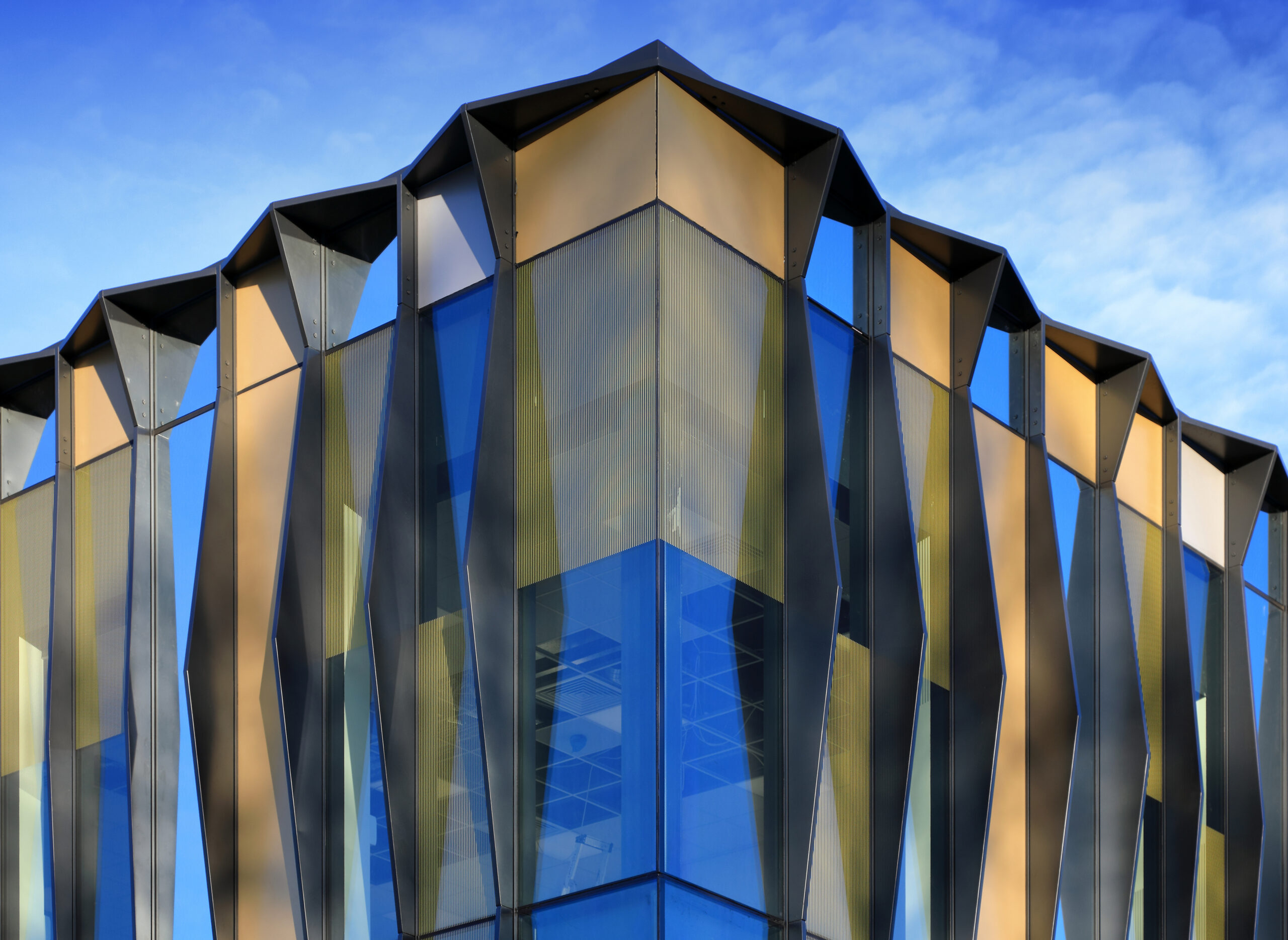
Derived from French, meaning “sun breaker,” Brise Soleil refers to a system of sunshades or louvres designed to protect buildings from solar heat while allowing natural light to enter.
With modern architecture constantly pushing the boundaries of creativity, innovation, and design, Brise Soleil has become symbolic of sustainable modern building design. The principle behind the design is to control the amount of both sunlight and heat that enters a building, creating an eco-friendly, comfortable environment for those inside.
How Does Brise Soleil Work?
The core function of a Brise Soleil system is to control the amount of solar heat that enters a building while allowing natural light to filter through. This is achieved through the strategic placement of sunshades, fins, or louvres that block or diffuse sunlight based on the building’s orientation and the angle of the sun.
Brise Soleil systems work by deflecting sunlight away from the building’s windows, reducing the amount of direct solar radiation that enters the interior. By managing solar heat gain, these systems help maintain a comfortable indoor temperature, reducing the need for air conditioning or artificial cooling systems. In winter months, they also help retain heat inside the building, hugely contributing to overall energy efficiency. They are often used in Passivhaus builds, contributing to 90% energy savings compared with typical building stock, compared with typical building stock.
The design of Brise Soleil systems is carefully considered to ensure that they allow sufficient natural light into the space. The slats or fins are typically positioned at angles that allow daylight to enter the building while minimising glare and harsh sunlight. This balance between light control and energy efficiency is key to making Brise Soleil systems a practical and sustainable solution for modern architecture.
Brise Soleil vs Louvres
The term Brise Soleil (French for “sun breaker”) refers to external architectural shading systems designed to reduce solar heat gain and improve occupant comfort. These systems can take many forms, including horizontal or vertical fins, screens, canopies, and other fixed shading elements integrated into the façade. While louvres may sometimes contribute to solar control, the term louvre is more commonly associated with ventilation and screening products, where angled blades are used to manage airflow, privacy, or weather protection rather than primary solar shading.
What Are The Different Types of Brise Soleil Materials
Brise Soleil systems are available in a range of materials, including timber, aluminium and glass. Or, you can have something completely bespoke depending on your building project.
Timber
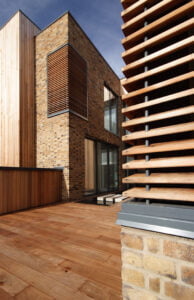
Timber is one of the most neutral and possibly aesthetically pleasing materials for creating Brise Soleil systems. It offers a warm, organic feel that can help soften the modern architecture of a building while blending into the surroundings.
The timber fins used in Brise Soleil applications come in a wide range of species and finishes, allowing for flexibility in both appearance and performance. If you’re looking for a more natural, earthy finish to your building, timber can be a stunning option.
If sustainability is a priority for your project, wood materials are a fantastic, renewable, eco-friendly choice.
Aluminium
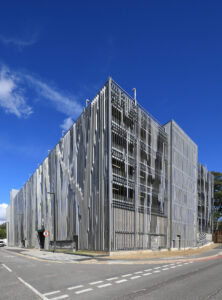
Aluminium gives a striking look to any building. If you need to achieve a modern, sleek look to your building, this metal can create a modern and durable aesthetic to the exterior.
Aluminium aerofoil profiles are available in a range of widths from 60mm to 600mm as single-piece extrusions. For larger profiles, two- or three-part extrusions can be clipped together to achieve the desired size. The choice depends on the building’s shading requirements, span and aesthetic goals.
Aluminium is lightweight, corrosion-resistant, and highly customisable, making it a practical choice for a wide range of architectural styles and environments. Its durability and ability to withstand the elements make it particularly well-suited for both residential and commercial buildings.
Glass
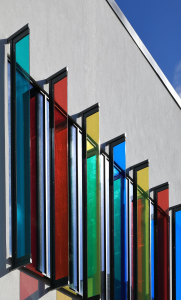
Glass offers a unique solution for Brise Soleil systems, as it allows for solar control without completely sacrificing natural light or obstructing exterior views. Instead of completely blocking the sun like opaque materials such as timber or aluminium, glass louvres are engineered with various surface treatments, like silk-screened patterns or coloured laminates, that effectively filter and diffuse direct sunlight.
The use of glass in these systems also provides architects with considerable aesthetic and functional flexibility. Glass fins can be installed as fixed elements or as part of a motorised, adjustable system that tracks the sun’s path to optimize performance throughout the day and year. Furthermore, the material is highly durable, corrosion-resistant, and low-maintenance, retaining its original appearance for a long time compared to natural materials like wood.
Discuss your Brise Soleil project
Speak to Contrasol’s team about bespoke Brise Soleil systems designed to improve solar control, energy efficiency, and architectural performance.
FAQs
Is Brise Soleil suitable for both new builds and existing buildings?
Yes. Brise Soleil can be designed into new buildings from the outset, but it can also be added to existing façades as part of a refurbishment or upgrade, depending on the structure and fixing requirements.
Does building orientation affect how Brise Soleil should be designed?
Yes. Orientation has a big impact on how Brise Soleil performs. South-facing façades often use horizontal fins, while east and west elevations usually need vertical fins to manage low-angle sun and glare.
At what stage of a project should Brise Soleil be considered?
Ideally, Brise Soleil is considered early in the design process so it integrates smoothly with the façade. That said, it can also be introduced later or as part of a retrofit where needed.

